WTE Energy Overview - Solid Fuel Based Burner
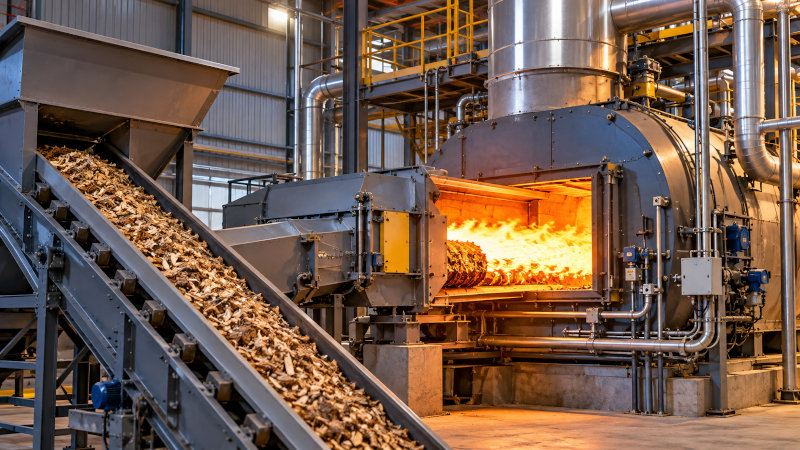
Solid fuel based burner systems provide a practical way to convert the energy contained in solid fuels into useful process heat. These systems can be designed around the characteristics of the available fuel, the heat requirements of the application, and the equipment already operating within a facility.
WTE Energy works with solid fuel combustion applications as part of an overall approach to energy recovery, process heating, fuel flexibility, and system integration.
Turning Solid Fuel Into Useful Energy
Unlike gaseous or liquid fuels, solid fuels require careful handling, metering, combustion air management, and ash management. An effective burner system brings these elements together to provide controlled and consistent combustion.
A typical system moves fuel from storage or handling equipment to a controlled feed system. The fuel is introduced into the combustion zone, where properly managed air and temperature conditions allow the fuel to burn and release its stored energy. The resulting heat can then be used directly in a process or transferred to other equipment.
Fuel Flexibility
Solid fuel systems can potentially be designed for a wide variety of fuels, depending on the requirements of the individual application. These may include:
- Wood and wood-derived fuels
- Biomass
- Agricultural residues
- Processed solid fuels
- Industrial solid fuels
- Other suitable combustible materials
The physical and chemical characteristics of the fuel are an important part of system design. Moisture content, particle size, heating value, ash content, density, and consistency can all influence fuel handling and combustion performance.
Controlled Combustion
Successful solid fuel combustion requires more than simply introducing fuel into a combustion chamber. Fuel feed rate, combustion air, temperature, residence time, and mixing all contribute to the performance of the system.
A properly designed system seeks to maintain stable combustion while efficiently transferring the available heat to the intended process. Controls can help the system respond to changing heat requirements and variations in fuel characteristics.
Major System Considerations
Depending on the application, a solid fuel based burner system may incorporate or interface with:
- Fuel receiving and storage
- Fuel preparation and sizing
- Metering and feed equipment
- Combustion chamber or burner equipment
- Primary and secondary combustion air systems
- Temperature and combustion controls
- Ash collection and removal
- Heat recovery or process equipment
- Particulate and emissions control equipment
Integration With Process Equipment
The burner is only one part of a complete thermal system. Solid fuel combustion can be integrated with equipment such as boilers, dryers, process heaters, thermal systems, and other industrial applications requiring a dependable source of heat.
Existing facilities may also present opportunities to integrate new combustion equipment with current material handling, heat recovery, air handling, and emissions control systems.
Designed Around the Application
Every solid fuel application is different. The appropriate equipment and system configuration depend upon the fuel being used, the required heat output, operating conditions, environmental requirements, available space, and the equipment located upstream and downstream of the burner.
Understanding the complete process is therefore an important part of developing an effective solution.
The WTE Energy Approach
WTE Energy approaches solid fuel based burner applications as part of the larger energy and process system. By considering fuel characteristics, combustion requirements, material handling, heat utilization, emissions control, maintenance, and system integration together, equipment can be matched more closely to the needs of the application.
Whether evaluating a new installation, upgrading an existing system, or exploring opportunities to utilize an alternative solid fuel, the goal is a practical system designed around the fuel, the process, and the facility.
Solid Fuel. Useful Energy. Integrated Solutions.
Solid fuels can represent both an energy resource and a material management opportunity. With appropriate handling, combustion, controls, and system integration, that energy can be converted into useful heat for a wide range of industrial processes.

Equipment. Experience. Solutions.
Bob Rice | RiceEquipmentSolutions.com | rec2@ptd.net